When precision matters most, navigation alone isn't enough. CT-to-body divergence and tool-to-tissue divergence can compromise procedural accuracy at the point of biopsy.
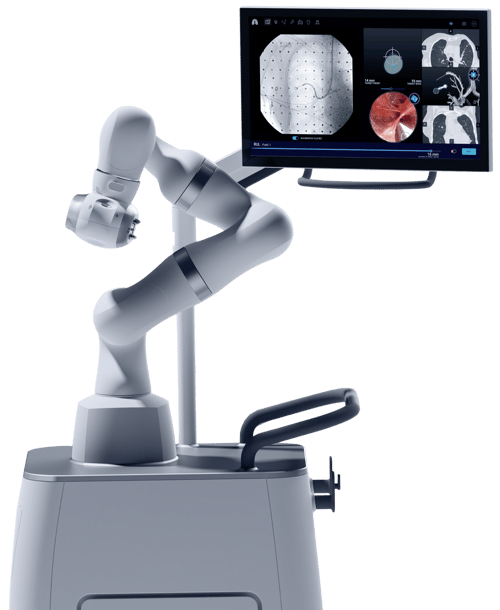
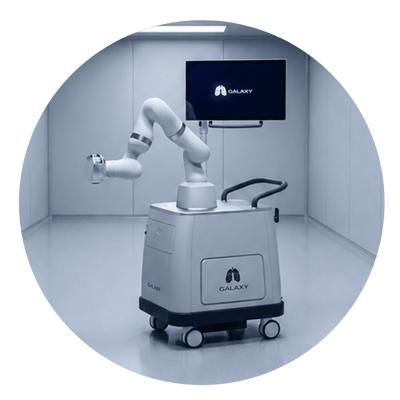
With onboard 3D imaging and advanced tool targeting, the Galaxy™ System delivers real-time lesion tool localization, targeting, and confirmation to help physicians correct for divergence and biopsy with confidence regardless of lesion size, location, or opacity.
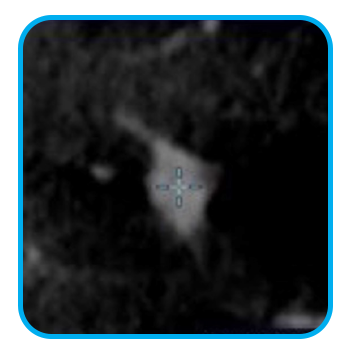
Real Time Biopsy Visualization
SCOPE TARGETING
Corrects for CT-to-Body Divergence
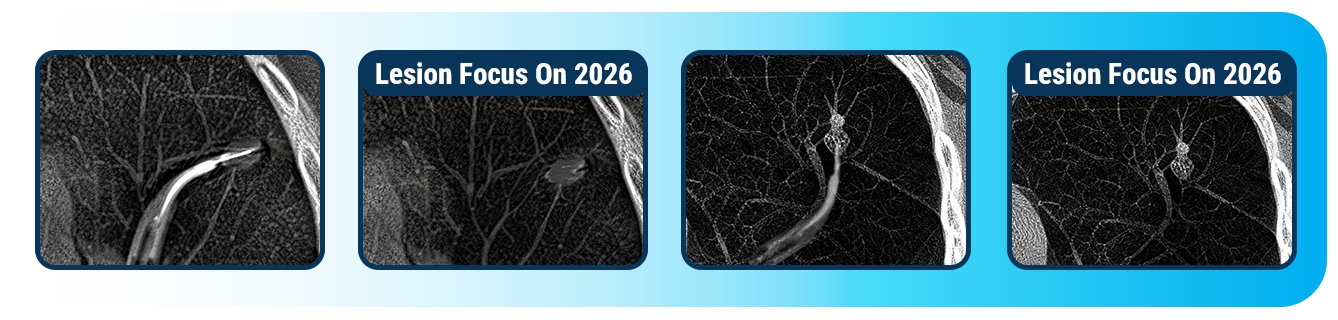
Dual-Mode Imaging
Updated lesion localization
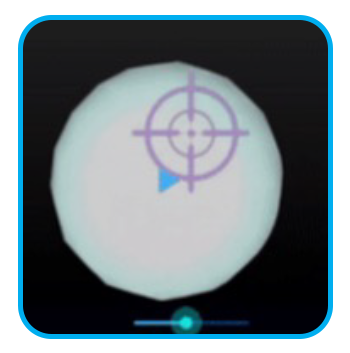
Virtual Targeting
Guidance for scope targeting
TOOL TARGETING
Corrects for Tool-Tissue Divergence
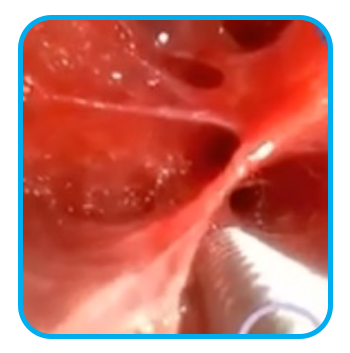
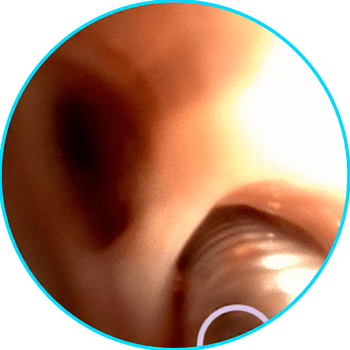
Always-On Camera
Ensure ideal tool approach and avoid critical structures
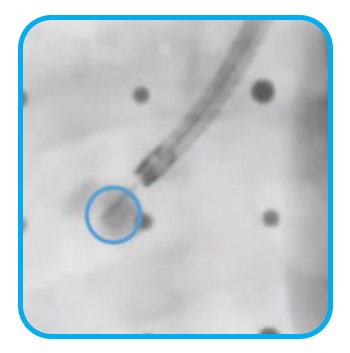
Augmented Fluoroscopy
Visualize center strike in real-time, adjusting for tool movement
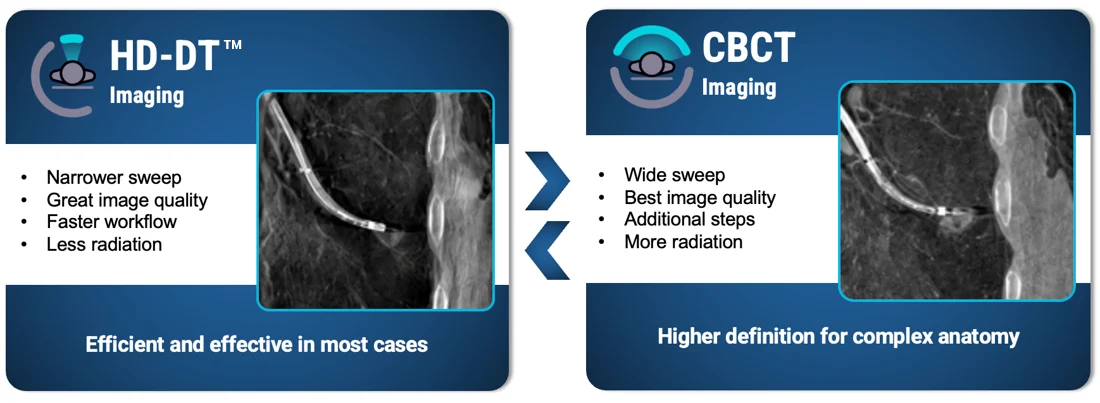
Dual Mode Imaging
The freedom to choose High-Definition Digital Tomosynthesis (HD-DT) or Cone-Beam CT (CBCT) at any point in the case without changing your workflow
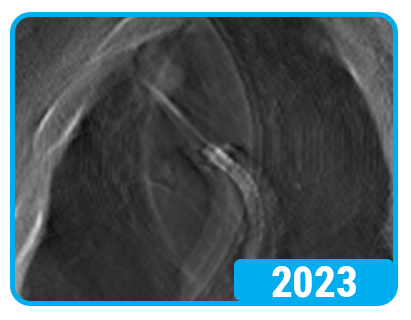
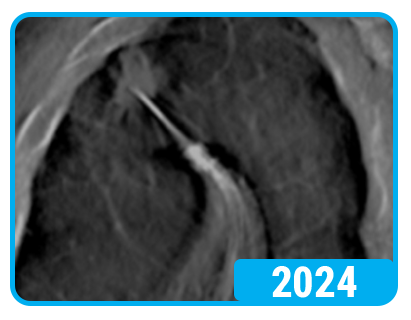
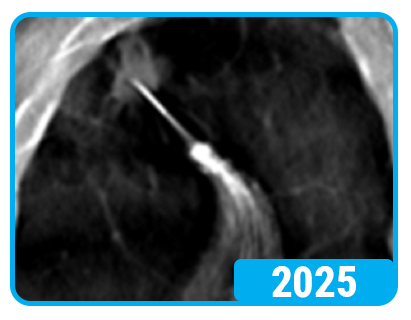
High-Definition Digital Tomosynthesis (HD-DT)
Not all DT algorithms are the same. Galaxy’s algorithm is continually evolving to further improve both image quality and workflow efficiency.
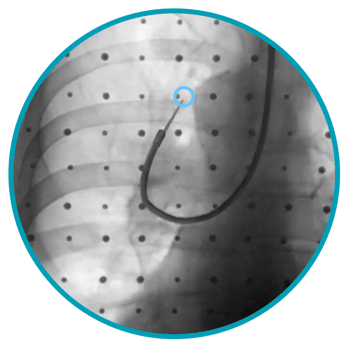
Augmented Fluoroscopy
Real-Time Fluoroscopic Overlay & Tool Visualization Pinpoint lesion location and visualize the tool pathway on live fluoroscopy to identify and correct tool-tissue divergence in real time.
Tool-in-Lesion Confirmation Confirm tool position across multiple planes before you sample.
Always-on Camera
Continuous Visualization Keep the airway and tool in constant view with built-in suction and irrigation to keep the camera clear for the whole case.
Improved Precision & Safety Track subtle shifts in tool position and orientation while spotting critical structures and bleeding earlier.
Workflow inefficiencies can affect procedural throughput, staff productivity, and program scalability.
As a next-generation platform, the Galaxy System streamlines imaging and eliminates disjointed case workflows and scope reprocessing so you can consistently do more cases, faster.
Streamlined Workflow
One system supports the full procedure, reducing handoffs and simplifying room setup and turnover, and eliminating the need for cloud bioposies.
Data & Workflow stay in the Room: HD-DT imaging, right at the table, without leaving the room for CBCT.
No C-Arm Workflow or Added Spins: Simplify imaging directly through the system and confirm positioning without extra imaging spins.
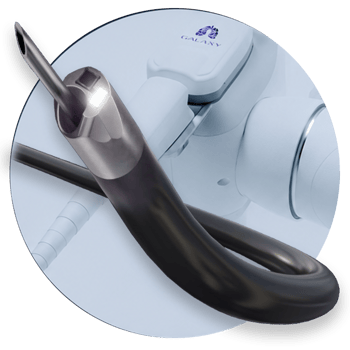
Single-Use Scope
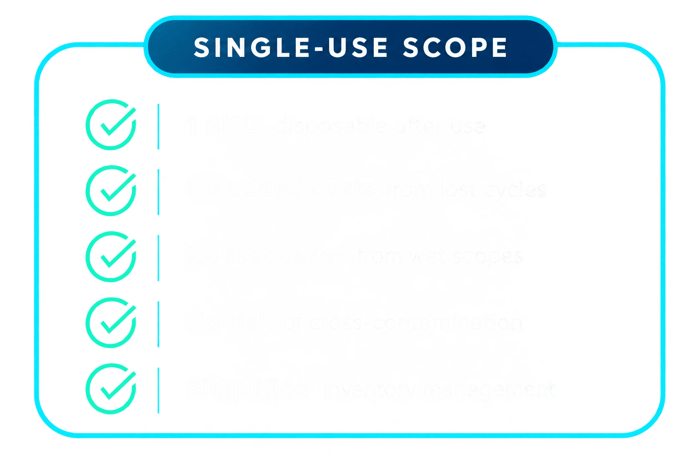
A fully disposable scope removes reprocessing from your workflow entirely, protecting image quality and simplifying inventory from case to case.
Precision Navigation: Easily reach all 18 segments of the lung.
Largest Working Channel: 2.1 mm working channel with broad tool compatibility.
Consistent Scope Quality: No degradation related to scope reuse.
Therapy Ready
Deliver therapy without hesitation, since the scope isn't needed for another case.
Reduced Risk and Increased Efficiency
Eliminate Per Case Overhead
Reduced Infection Risk
Reduced Case Loss
Growing a robotics program shouldn't mean higher costs, added complexity, or increased radiation exposure. Sustainable growth calls for a smarter approach.
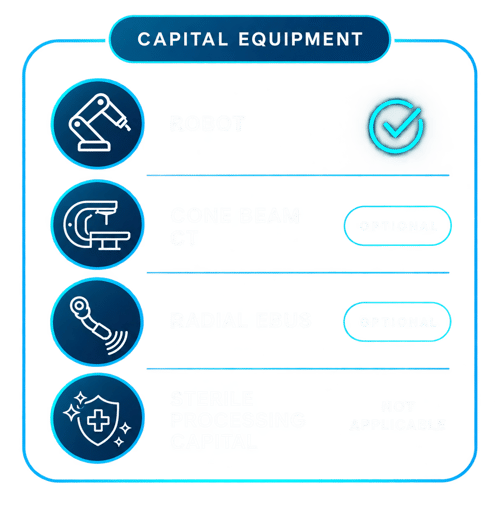
The Galaxy System works within your existing ecosystem by eliminating the added capital investment and infrastructure required by other platforms, while helping reduce radiation exposure in the procedure room.
Low Total Cost of Ownership
No Added Capital Requirements
Leverage your existing equipment with broad 2D C-arm compatibility and no further capital required
Predictable Per Case Cost
Single-use scopes eliminate the operational challenges and economic variables inherent with reusable scopes
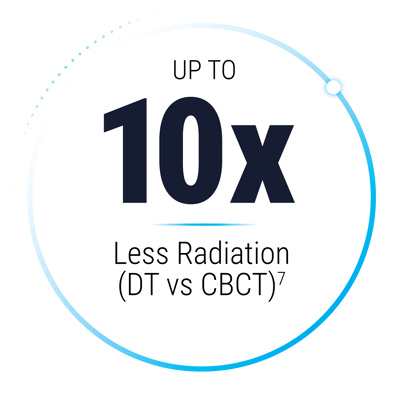
Lower Radiation Dose
HD-DT imaging uses a partial arc sweep vs. CBCT's wider rotation. Fewer X-ray projections means significantly less dose for both patients and staff
Meets ALARA Guidelines
Delivering the imaging each case actually needs, in line with the clinical best practice of using the lowest effective radiation dose
Lower Patient Radiation Dose
Reduces cumulative radiation exposure over a patient's care, supporting long-term safety alongside strong diagnostic performance.
Protects Clinical Staff
Fewer X-ray projections mean less scatter radiation in the room, supporting a safer environment for the physicians and staff performing procedures every day.
Mahajan AK, Duong DK, Cortes J, Bhadra K. The match 2 study: Robotic assisted bronchoscopy with integrated imaging with assessment of digital tomosynthesis (DT) and augmented fluoroscopy (AF): Three-Dimensional accuracy as confirmed by cone beam computed tomography (CBCT). Respir Med. 2026 Mar;253:108693. doi: 10.1016/j.rmed.2026.108693. Epub 2026 Jan 29. PMID: 41620189.
Data on file.
Styrvoky K, Schwalk A, Pham D, Madsen K, Chiu H, Abu-Hileh M. Procedural times with robotic-assisted bronchoscopy: A high volume single-center study. Therapeutic Advances in Respiratory Disease.2024;18:17534666241277668. doi:10.1177/17534666241277668
Ofstead CL, Quick MR, Eiland JE, Adams SJ. A glimpse at the true cost of reprocessing endoscopes: Results of a pilot project. International Journal of Healthcare Central Service Material Management.
Mouritsen JM, Ehlers L, Kovaleva J, Ahmad I, El-Boghdadly K. A systematic review and cost effectiveness analysis of reusable vs. single-use flexible bronchoscopes.
Garrett BM, et al. Robotic-Assisted Bronchoscopy for the Diagnosis of Peripheral Pulmonary Lesions: Initial Experience at a High-Volume Center. Chest. 2021;160(4 Suppl):A1583–A1584. Presented at ACCP Annual Meeting 2021.
Based on a comparison of representative effective dose ranges from CBCT and DT imaging in thoracic applications and bronchoscopy workflows reported in the published literature